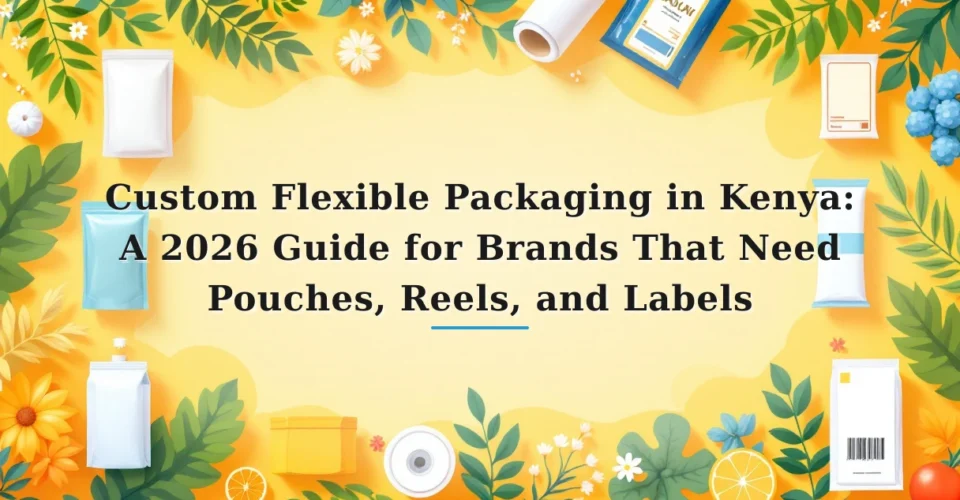
Kenyan brands are under pressure to launch faster, look better on shelf, and protect products across hot, humid, and busy supply chains. That's why custom flexible packaging Kenya is no longer just a procurement choice, it's a growth decision. Flexible Futures supports food, beverage, cosmetics, pharmaceutical, household, and private label brands with custom pouches, self-adhesive labels, and precision-laminated reels designed around real product needs, not generic stock packs.
Why Kenyan Brands Prioritize Custom Flexible Packaging: DPI Holdings
Packaging is commonly defined as the science, art, and technology of enclosing or protecting products for distribution, storage, sale, and use, as explained in Wikipedia's packaging overview. For a manufacturer in Kenya, that definition becomes very practical: your pack must survive filling, storage, transport, retail handling, and consumer use.
Flexible packaging is popular because it can reduce bulk, support printed branding, and fit many product types. Competitors such as Packaging Industries Limited highlight detergent, dairy, oil pouch, and bakery solutions, while market directories list players such as Ramco Plexus, Flexipac, Polyflex Industries, and Silafrica. The gap for many SMEs is not awareness, it's finding a partner that can handle custom design, low minimum order quantities, and product-specific structures without slowing launch plans.
Key insight: the best flexible pack is not the prettiest design; it's the pack that protects the product, sells the brand, and works on your filling line.
What "custom" should mean in 2026
A custom pack should be built around your product's moisture sensitivity, oil content, shelf life, fill weight, storage temperature, and target customer. A juice pouch, spice sachet, cosmetic refill, and pharma label need different material behavior.
Strong customisation usually covers:
- Format: stand-up pouch, flat pouch, sachet, reel stock, wrap-around label, or self-adhesive label
- Barrier needs: light, oxygen, aroma, grease, moisture, or puncture resistance
- Branding: colour control, finish, typography, product claims, and shelf-blocking impact
- Operations: sealing performance, machine compatibility, reel direction, and packing speed
- Compliance: legibility, batch coding space, ingredient panels, warnings, and traceability details
Which Flexible Packaging Format Fits Your Product Best?
Choosing the wrong format can create hidden costs: leaking seals, label lift, slow filling, poor shelf display, or excess waste. Start with the product, then choose the pack. Flexible Futures helps brands compare packaging formats before committing to print, which is useful for startups and private label teams testing new SKUs.
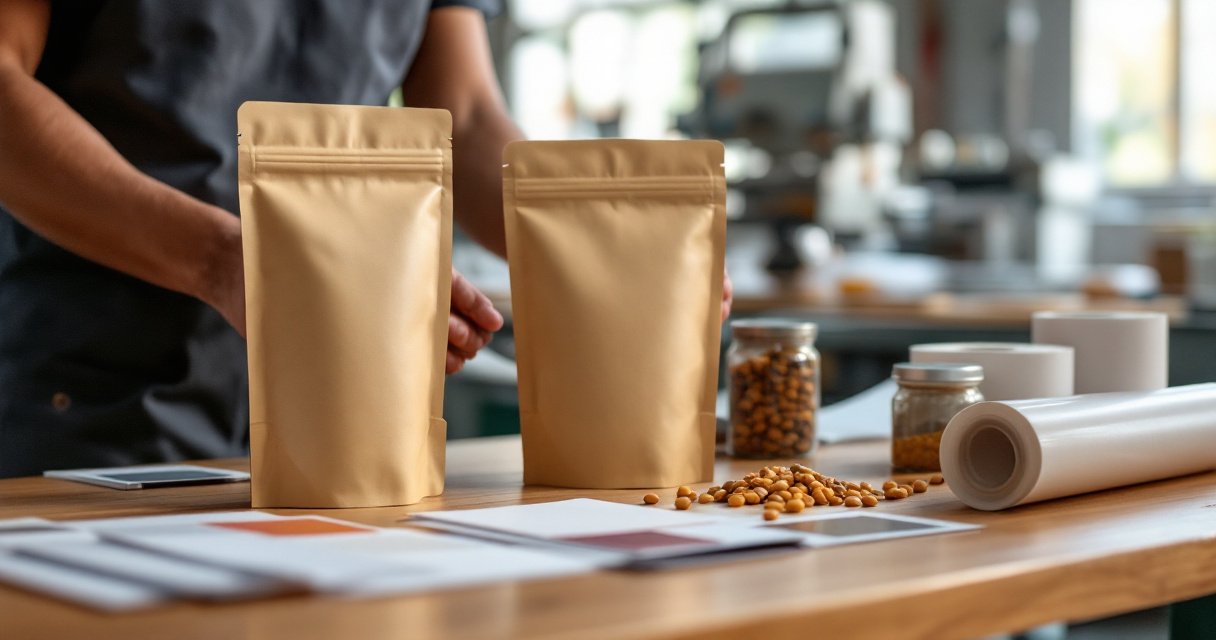
Packaging format comparison for Kenyan manufacturers
| Format | Best fit | Main advantage | Watch-out |
|---|---|---|---|
| Stand-up pouches | Snacks, powders, pet products, refills | Strong shelf presence and reseal options | Needs careful gusset and seal design |
| Flat pouches and sachets | Spices, sauces, samples, single-use products | Low unit size and easy distribution | Limited front-panel space |
| Laminated reels | Automated filling for snacks, drinks, dairy, detergents | Fast production and consistent sealing | Reel specs must match your machine |
| Self-adhesive labels | Bottles, jars, cosmetics, pharma, household goods | Flexible branding across containers | Adhesive must match surface and storage conditions |
| Drink and juice packs | Juices, concentrates, dairy-style beverages | Portable and brandable | Barrier and seal integrity are critical |
Food and beverage brands often need pouches or reels with stronger barrier properties. Cosmetics brands care about premium finishes and label durability. Pharmaceutical and health products need clarity, batch information, and reliable adhesion. Retailers building private label ranges usually need consistency across many SKUs, plus fast design changes.
How to shortlist the right structure
Use this simple sequence before asking for a quote:
- Define the product weight, fill method, and expected shelf life.
- Confirm whether the pack touches food, cosmetics, pharma, or chemicals.
- Decide if you need a pouch, reel, label, or mixed packaging set.
- Share storage conditions, including heat, humidity, refrigeration, or outdoor exposure.
- Ask for material options, including recyclable, biodegradable, or compostable choices where suitable.
- Review artwork, barcode space, batch coding area, and regulatory text before production.
This order prevents a common mistake: designing the artwork first, then discovering the material or machine cannot support it.
What to Check Before Choosing a Flexible Packaging Supplier in Kenya
Supplier selection should go beyond price per piece. A low quote can become expensive if colours shift, seals fail, reels jam, or labels peel during transport. Integrity matters because packaging carries your brand promise into the customer's hands.
Competitor pages often list industries served, such as detergent, dairy, oil pouches, and bakery solutions. That's useful, but you should ask deeper questions about process control, design support, and scale. In 2026, a strong supplier should help with both launch packs and repeat production.
Questions that reveal supplier capability
Ask these before placing an order:
- Can you support low MOQs for test launches and growing SMEs?
- Do you offer design support or only print-ready production?
- Which pouch, reel, and label formats do you produce in-house?
- How do you check print consistency, lamination quality, and sealing performance?
- Can you advise on recyclable, biodegradable, or compostable materials?
- What lead times apply for new artwork versus repeat orders?
- Can you support private label ranges with many SKUs?
A supplier that answers clearly can reduce launch risk. A supplier that avoids technical questions may be treating every product the same.
Why design support can save money
A strong packaging partner will flag problems before production. For example, tiny white text on a metallic background may look premium on screen but fail on shelf. A label adhesive may work on glass but not on a textured plastic container.
The Flexible Futures platform is built for brands that need packaging shaped around product type, industry, and identity. That matters for SMEs because design revisions, failed trials, and excess inventory can drain cash faster than many founders expect.
Practical rule: pay attention to the supplier's questions. If they ask about your product, filling line, storage, and sales channel, they're thinking beyond print.
Sustainability, Traceability, and Shelf Appeal Are Now Connected
Sustainability in packaging is no longer only about using less plastic. Brands must balance protection, recyclability, cost, shelf life, and customer perception. A pack that spoils the product faster may create more waste than it saves, so material choice needs careful review.
Research by D. Muthumanickam, C. Poongodi, and R. Kumaraperumal in a 2022 paper on IoT-based sustainable agriculture examined how digital systems support sustainability in agriculture. While the paper is not about packaging production, it reflects a broader direction that matters to food brands: more traceable, data-aware supply chains.
For natural products, cosmetics, and health products, knowledge management also matters. The 2022 LOTUS initiative paper focused on open knowledge management in natural products research, a useful reminder that ingredient transparency and product data are becoming more important across health and wellness categories.
Eco-conscious choices that still need product testing
Flexible packaging options may include recyclable, biodegradable, or compostable materials, depending on the application. Still, no material is automatically right for every product.
Check these trade-offs:
- Recyclable films: good brand signal, but availability and barrier performance must be checked
- Biodegradable materials: useful in some cases, but storage and shelf-life needs matter
- Compostable materials: attractive for certain products, but not always suitable for liquids, oils, or long shelf life
- Lightweight laminates: can reduce bulk, but must still protect aroma, moisture, and seal strength
Shelf appeal also has to work with sustainability. Matte finishes, clear windows, simple colour systems, and clean label layouts can make a pack feel modern without overcomplicating production.
What to Expect in 2027 for Custom Flexible Packaging in Kenya
The next phase will likely favour brands that can launch smaller runs, test faster, and improve packaging based on sales feedback. Large production runs will still matter for established products, but startups and SMEs need flexibility before locking into high volumes.
Private label packaging should also grow as retailers and manufacturers create more own-brand products. That means faster artwork changes, consistent label systems, and packaging families that look connected across flavours, sizes, and categories.
Expect more demand for:
- Short-run custom pouches for market testing
- Digitally supported artwork workflows
- Better label durability for cosmetics and health products
- More eco-conscious material conversations
- Packaging that supports QR codes, batch data, and customer education
- Faster repeat orders for brands that prove demand
Digital-first packaging partners will have an advantage because they can support smaller brands without forcing them into oversized commitments. Using Flexible Futures, a founder can plan packaging around the stage of the business: sample batch, first retail order, regional expansion, or full product line.
How growing brands should prepare now
Treat packaging as part of product development, not a final decoration step. Before 2027 planning, create a simple packaging file for every SKU. Include dimensions, materials, supplier contacts, artwork versions, barcode details, batch coding rules, and reorder notes.
That file helps when you add flavours, launch a private label line, or shift from manual filling to automated reels. It also protects brand consistency when freelancers, designers, procurement teams, and production staff all touch the same product.
Conclusion
Custom flexible packaging in Kenya should protect product integrity, improve shelf appeal, and make scaling less risky. Start by matching your product to the right format, then review barrier needs, artwork, machine compatibility, sustainability goals, and supplier support.
If you're preparing a new food, drink, cosmetics, pharma, household, or private label product, build your packaging brief before requesting prices. Share your product type, fill weight, target shelf life, artwork goals, and launch quantity. Then contact Flexible Futures to explore custom pouches, laminated reels, self-adhesive labels, and eco-conscious packaging options that fit your next production run.
Generated by EarlySEO.com