Kenyan food brands are no longer competing only on taste; the pouch on the shelf often decides whether a buyer picks up the product. Custom food packaging pouches in Kenya now need to protect freshness, carry strong branding, meet retail expectations, and support smaller production runs. Flexible Futures helps food, beverage, cosmetics, and health brands build practical flexible packaging that fits their product, budget, and growth stage.
Why custom pouches are winning on Kenyan shelves in 2026
Packaging is the science, art, and technology of enclosing or protecting products for distribution, storage, sale, and use. For food brands, that means a pouch is not just a printed bag; it is a barrier, sales tool, logistics choice, and customer trust signal.
Flexible packaging has become popular because it suits many Kenyan product categories: coffee, tea, nuts, flour, spices, sauces, dried fruit, cereals, powders, pet food, and juice concentrates. Compared with rigid containers, pouches can reduce storage bulk, improve shelf display, and allow more brand space on the front panel.
A good pouch should answer three buyer questions fast: what is inside, why should I trust it, and how do I use or store it after opening?
Many local competitors still focus heavily on mockups and basic stand-up pouch printing. That matters, but growing brands need more than a nice design. They need pouch structure, seal strength, label accuracy, low-MOQ ordering, and repeatable print quality.
Food categories that benefit most from pouch packaging
Custom pouches work best when the packaging format matches the product behavior. Dry snacks need moisture protection. Coffee needs aroma retention. Sauces and drink products may need spouts, stronger seals, or heat-resistant laminated films.
- Dry foods: nuts, grains, cereals, tea, spices, flour, and powdered drinks
- Premium products: coffee, granola, dried fruit, supplements, and specialty foods
- Liquid and semi-liquid foods: sauces, purees, honey, syrups, and drink concentrates
- Retail-ready lines: private label products, seasonal packs, and supermarket SKUs
Brands planning multiple SKUs can explore customised packaging solutions instead of treating every pouch as a separate one-off job.
Match the pouch type to the product before you design artwork
A beautiful pouch can fail if the format is wrong. Start with the food, then choose the pouch. Ask how sensitive the product is to oxygen, moisture, oil, light, heat, and handling during transport.
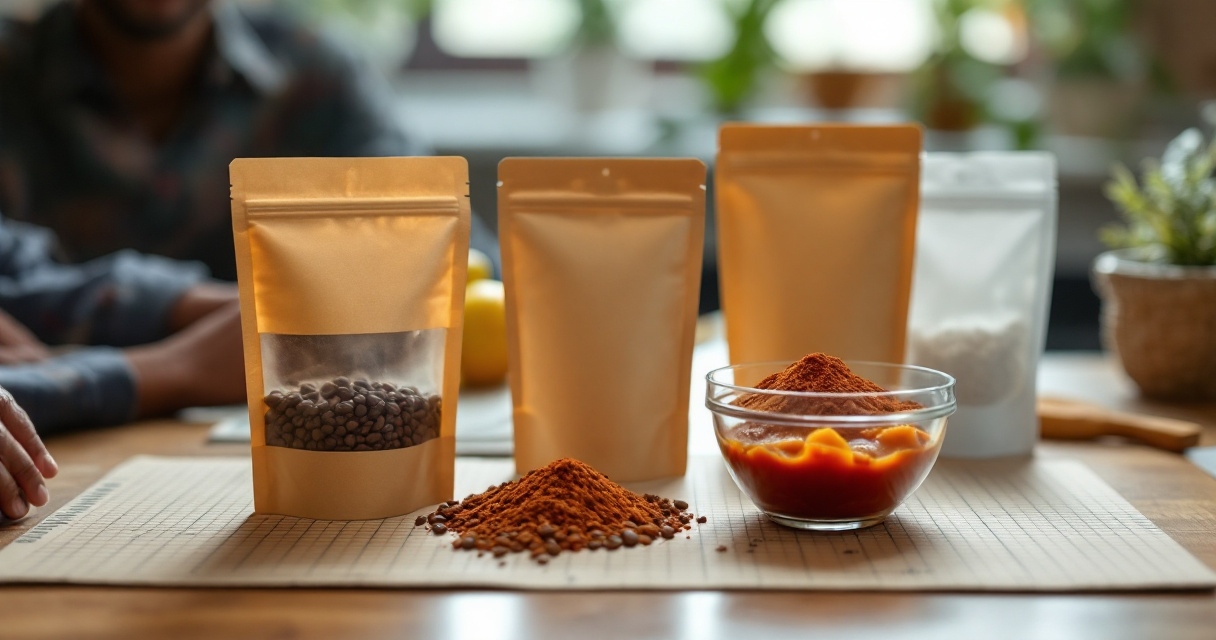
For ready-to-eat or shelf-stable foods, pouch construction matters even more. A retort pouch is a food packaging format made from laminated flexible plastic and metal foils, allowing sterile packaging of certain foods and drinks handled by heat processing. Not every food needs retort packaging, but the definition shows why laminated structure must be chosen carefully.
Research by Dey, Shome, Bandyopadhyay, and colleagues in Pathogens examined methicillin-resistant staphylococci in the dairy value chain, underlining why food supply chains need strong hygiene and control practices from processing through packaging study. Packaging does not replace food safety systems, but it helps preserve a controlled product once packed.
Pouch format comparison for Kenyan food brands
| Pouch type | Best for | Main advantage | Watch-out |
|---|---|---|---|
| Stand-up pouch | Snacks, tea, coffee, cereals | Strong shelf presence | Needs correct gusset sizing |
| Flat pouch | Spices, powders, samples | Cost-effective for small packs | Less shelf stability |
| Zipper pouch | Nuts, coffee, pet food | Reclosable after opening | Zipper placement affects fill volume |
| Spouted pouch | Sauces, purees, juice products | Easy pouring and controlled use | Cap and seal quality matter |
| Laminated reel | Automated filling lines | Faster packing at scale | Requires machine compatibility |
If you already know you need stand-up, flat, zipper, or spouted formats, review DPI Holdings' custom pouch packaging options before briefing a designer.
Material and barrier choices that affect shelf life
The right film structure depends on your food's risk profile. A crisp snack may go soft when moisture enters. Coffee can lose aroma. Oily foods may stain weak films. Powdered products need good seals to avoid leaks.
Common decision points include:
- Choose barrier level based on moisture, oxygen, aroma, and light sensitivity.
- Pick finish, such as matte, gloss, clear window, metallic effect, or kraft-style look.
- Confirm seal method, filling temperature, and expected storage conditions.
- Test pouch size with the real fill weight, not only digital artwork.
Flexible Futures can support recyclable, biodegradable, and compostable options where they suit the food, shelf life, and budget.
Design custom food pouches that sell without confusing buyers
Design should start with the shelf, not the laptop screen. In a supermarket, kiosk, hotel supply shelf, or online product thumbnail, shoppers scan fast. Your front panel needs clear product naming, weight, flavor, brand identity, and one or two strong trust cues.
Competitor pages in Kenya often promote mockup design, which is useful, but a mockup is only the first checkpoint. A production-ready pouch also needs correct dielines, print-safe margins, barcode placement, batch coding space, nutrition panel planning, and regulatory information where required.
Treat the pouch as a mini sales page: headline, proof, visual appetite appeal, instructions, and a clear reason to choose your brand.
Design elements that deserve more attention than logos
- Product hierarchy: make the food type readable before the brand slogan.
- Color coding: use consistent colors for flavors and sizes.
- Back-panel clarity: leave room for ingredients, storage instructions, contacts, and barcode.
- Window placement: show texture only if the product looks attractive and stays stable under light.
- Finish selection: matte can feel premium, gloss can boost color, metallic can signal indulgence.
Brands with jars, sachets, reels, and pouch lines should keep labels visually aligned. DPI's labels and laminated reels can help maintain one brand system across different packaging formats.
Why printed samples beat screen-only mockups
On-screen mockups hide real-world issues. Colors shift after printing. Small text may become hard to read. A pouch that looks premium on a render may feel too thin, too shiny, or poorly sized when filled.
Before full production, ask for physical checks where possible:
- Fill the pouch with the real product weight.
- Stand it on a shelf and view it from buyer distance.
- Check barcode scanning and batch code space.
- Rub-test key print areas and inspect seals.
- Compare matte, gloss, and transparent areas under store lighting.
Using Flexible Futures during this stage helps teams move from concept to practical packaging without over-ordering early test runs.
How to choose a Kenyan packaging supplier without costly rework
A supplier should understand food behavior, print production, and SME cash flow. Low minimum order quantities matter for startups and private label projects because brands often need to test flavors, pack sizes, and channels before scaling.

Strong suppliers also help you avoid hidden costs. Poor pouch sizing can increase product giveaway per pack. Weak seals can cause returns. Bad color control can make repeat orders look inconsistent on the shelf.
Ask about turnaround time, artwork support, sustainability options, and repeat order consistency. If you sell to retailers, confirm that your pouch can handle transport, stacking, and display conditions.
Supplier questions to ask before placing your first order
Use this checklist before approving a quotation:
- Which pouch structures suit my product and target shelf life?
- Can I order low MOQs while testing the market?
- Do you support custom design, or must I provide final artwork?
- What file format, dieline, and color setup do you require?
- Can the pouch handle filling, sealing, storage, and transport?
- Are recyclable, biodegradable, or compostable material options available?
- How will repeat orders be matched for color and dimensions?
For brands comparing formats, the wider flexible packaging range is a good starting point.
Red flags that signal avoidable packaging risk
Be careful if a supplier pushes one pouch type for every food. Also question vague answers about material thickness, seal testing, print method, and lead time. Cheap packaging can become expensive when product leaks, labels peel, or artwork has to be rebuilt.
Private label teams should be even more careful because one manufacturer may manage several retailer brands. Clear specifications protect every SKU. If you plan outsourced packing or multiple store brands, build a packaging standard before ordering stock.
What Kenyan food brands should prepare for in 2027
Packaging decisions in 2026 should leave room for the next stage. Retailers, export buyers, and consumers are likely to keep asking for clearer product information, better shelf appeal, and packaging materials that reduce waste where practical.
Digital print and flexible production will keep helping SMEs launch smaller batches. That favors brands testing new flavors, seasonal packs, influencer collaborations, and regional products before committing to large volumes.
The smartest move is not choosing the fanciest pouch; it is choosing packaging you can repeat, improve, and scale without confusing customers.
Practical upgrades to plan now
Focus on improvements that make your packaging easier to buy, use, and reorder:
- Build a pouch size system for small, medium, and bulk packs.
- Create one design template for all flavors and future SKUs.
- Reserve space for QR codes, batch details, and retailer stickers.
- Test eco-conscious materials against real shelf-life needs.
- Keep print files, dielines, and approvals organized for repeat runs.
When you are ready to compare materials, pouch formats, and artwork options, contact Flexible Futures with your product type, fill weight, target retail channel, and launch timeline.
Strategic Steps for Success with DPI Holdings
Custom food packaging pouches in Kenya work best when brand, material, size, seal, and production method are planned together. Start with your food's protection needs, choose a pouch format that fits how customers use it, then build artwork that stays clear on shelf and in repeat production. If you are launching a snack, coffee, sauce, powder, drink product, or private label range, send your brief to Flexible Futures and ask for pouch recommendations, low-MOQ options, and a practical path from sample to scale.
Generated by EarlySEO.com